The Impact of the COOTAD Reform on Ecuador’s Provincial Governments
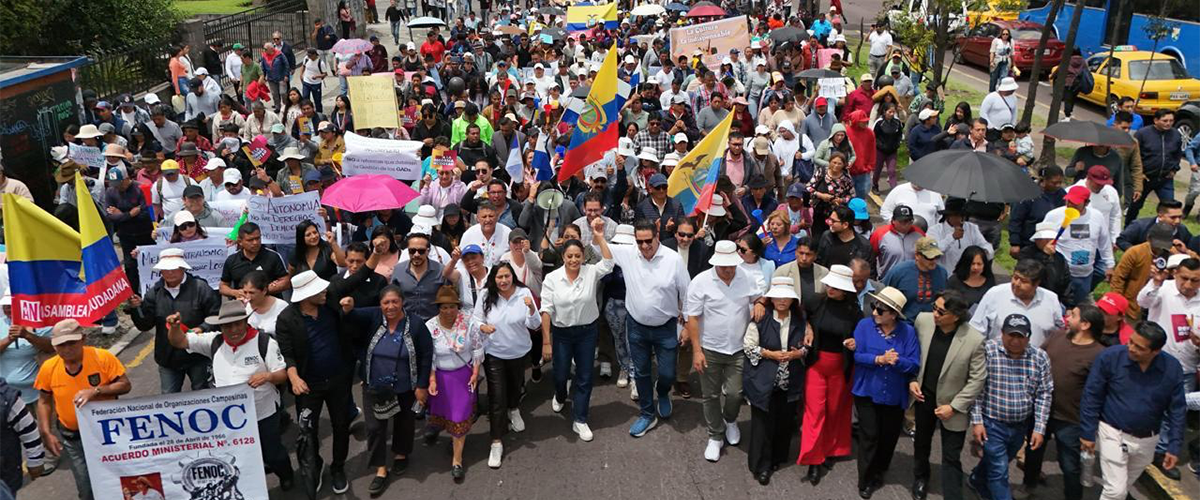
The recent entry into force of the Organic Reform Law to the COOTAD for the Sustainability and Efficiency of Public Spending has sparked a profound technical and political debate regarding the autonomy of Ecuador’s provincial governments. The regulation introduces a strict fiscal rule requiring prefectures to allocate at least 70% of their budgets to investment expenditure, while limiting current expenditure to 30%. The National Government defends this measure as a necessary instrument to ensure that public resources are translated into tangible works, such as rural road infrastructure and irrigation systems, arguing that many local administrations have excessively expanded their administrative payrolls at the expense of services delivered directly to citizens.
For their part, provincial governments have put forward a series of arguments questioning the feasibility of these percentages without affecting critical areas of their management. Prefectures maintain that a significant portion of what the law now classifies as current expenditure actually constitutes indispensable social and technical investment. They argue that the salaries of physicians working in rural brigades, agricultural technicians advising small-scale producers, and operational personnel responsible for heavy machinery used in road maintenance should not be considered bureaucracy, but rather the driving force behind the execution of their competencies. According to documentation submitted by the provinces, the rigidity of the regulation could force the closure of support centers for victims of violence or the reduction of productive development programs that fundamentally depend on highly qualified human capital.
From a legal standpoint, the prefectures contend that the reform undermines the constitutional principle of financial autonomy and decentralization by imposing a standardized management model from the central government that fails to recognize the particularities of each territory. Legal teams representing the provincial governments warn that the gradual implementation of the law, which will reach its full level of enforcement in 2028, does not resolve the underlying issue: the potential neglect of concurrent responsibilities in health and social development that provinces have assumed in response to the absence of the central state. While the Constitutional Court reviews the filed legal challenges, a climate of technical uncertainty persists regarding how budgets will be restructured without paralyzing the operational capacity of intermediate levels of government.
ORU Fogar has expressed concern about this situation and, in a message published on X, stated: “After years of collaboration with Ecuador’s prefectures, we are closely monitoring the evolution of the situation and reaffirm our firm conviction: decentralization represents the most effective model for fostering democratic governance that is both efficient and citizen-centered.”