UN-Habitat Executive Director Reaffirms Her Commitment to the Territorial Approach with ORU Fogar
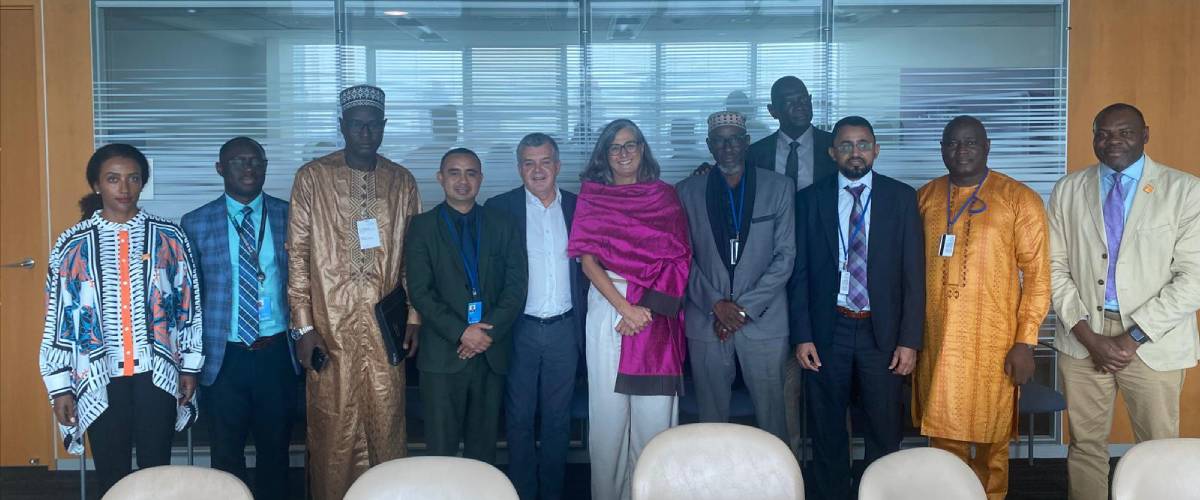
The ORU Fogar delegations attending the United Nations High-level Political Forum on Sustainable Development (HLPF) held a working meeting on 10 July 2026 at the United Nations Headquarters in New York with the Executive Director of UN-Habitat, Anacláudia Rossbach.
During the meeting, Carles Llorens, Secretary General of ORU Fogar, reiterated the organization's long-standing positions, which are already well known to the agency. He emphasized that the housing challenges currently at the centre of UN-Habitat's agenda are rooted in the lack of balanced territorial and rural development. Llorens expressed ORU Fogar's concern over the continued rural exodus occurring across the world—particularly in Africa—and called on UN-Habitat not to focus its policies exclusively on large urban centres, but instead to adopt a comprehensive territorial approach.
In this context, in response to the concept of the "Right to the City" enshrined in the New Urban Agenda, the Secretary General of ORU Fogar highlighted the European "Right to Stay" strategy promoted by European Commissioner Raffaele Fitto, arguing that public policies must ensure that families have the opportunity to build their future in their regions of origin.
Executive Director Anacláudia Rossbach responded by confirming that UN-Habitat has fully embraced this territorial approach and already holds a mandate in this direction. She agreed that achieving the 2030 Agenda and the Sustainable Development Goals (SDGs) necessarily requires a territorialized approach.
Following this introductory exchange, two of the regional leaders present—Koki Noriega, Governor of Áncash and representative of the National Assembly of Regional Governments of Peru (ANGR), and Abdoulaye Diakité, President of the Region of Koulikoro (Mali)—outlined the challenges facing their respective territories.
Governor Koki Noriega described the persistent problems caused by centralization in Peru, citing the country's air transport system as an example, where virtually all domestic flights continue to be routed through Lima. The Governor of Áncash also highlighted the critical challenges of disaster risk management arising from the rapid and unplanned urban expansion taking place in Peru's coastal and mountainous regions, which has significantly increased vulnerability. He called for greater support and a stronger role for regional governments so they can lead territorial planning and the provision of essential services aimed at mitigating these risks.
President Abdoulaye Diakité, illustrating the current situation in Mali, described the specific challenges facing his region, the country's third-largest demographic hub, with more than 2.25 million inhabitants and an exceptionally young population, nearly half of whom are under the age of fifteen. He explained the pressure generated by the proximity of Bamako, the deep territorial disparities, and the impact of rural poverty, which continues to drive migration towards the capital and abroad. He also pointed to the rapid expansion of artisanal gold mining and sand extraction, activities that attract labour and accelerate unplanned urbanization while creating major environmental, security and governance challenges. Against this backdrop, he stressed the need for UN-Habitat's support in promoting territorial urban policies adapted to local realities, developing basic infrastructure, establishing sustainable mobility systems and creating employment opportunities for young people. It was also emphasized that all these challenges are unfolding in a territory threatened by terrorism and armed conflict.
Following the presentations, a direct dialogue took place between the Executive Director and the governors on UN-Habitat's operational work in their respective countries. The meeting concluded with an agreement to establish much closer coordination, with the Executive Director herself offering direct channels of communication with UN-Habitat's country offices.
Finally, the Secretary General of ORU Fogar requested that UN-Habitat restore the technical support it had previously provided for the preparation of Voluntary Regional Reviews (VRRs), assistance that has diminished in recent years.