Córdoba Exports Its Model of a Center for Men in Situations of Violence
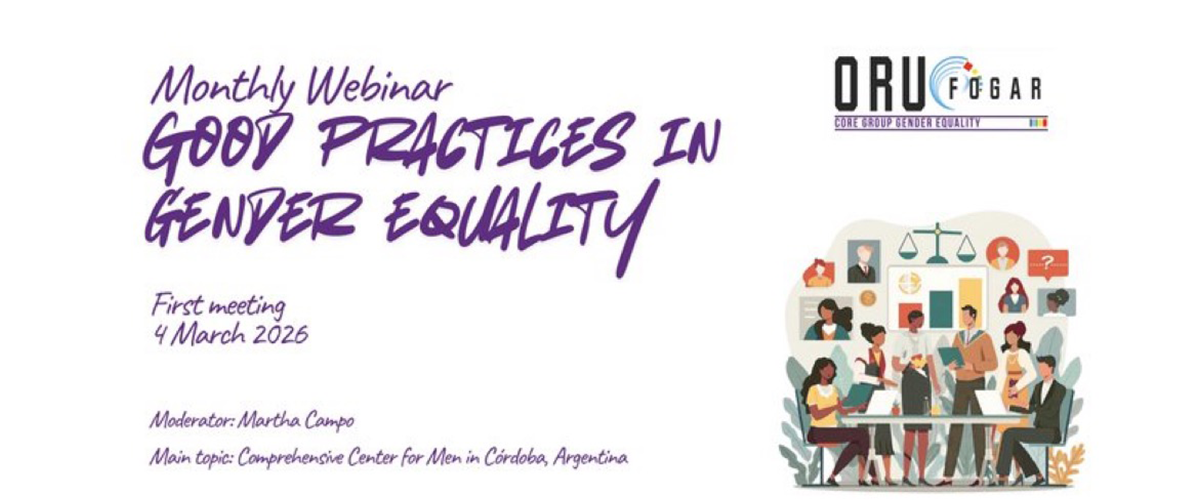
As part of a series of webinars organized by the ORU Fogar Working Group on Gender Equality dedicated to presenting regional best practices, the experience of the Comprehensive Center for Men in Situations of Violence (CIV) of the Province of Córdoba, Argentina, was presented. This first session, led by journalist Martha Campo, positioned the Córdoba model as a cutting-edge public policy aimed at eradicating gender-based violence through direct work with perpetrators. The initiative is part of a series of virtual spaces designed to exchange effective strategies that are already being replicated in other regions of Latin America and Europe.
Based on the premise that violence against women cannot be eradicated without intervening with those who perpetrate it, the Center will celebrate its 10th anniversary on July 1, 2026. During the meeting, Claudia Martínez, Secretary for Women of the Province of Córdoba, highlighted that the institution handles a critical volume of 300 new cases per month and maintains 25 weekly therapeutic groups. The program’s foundations draw on international theoretical frameworks, such as Rita Segato’s concept of the “mandate of masculinity,” focusing on dismantling patriarchal norms in order to effectively prevent recidivism.
One of the most striking facts shared during the session is that, among the approximately 25,000 men who have gone through its treatment programs, none has subsequently committed a femicide. These results have transformed the initial resistance from various sectors into growing support, demonstrating that addressing masculinity does not divert resources from victims but rather complements their protection by breaking the cycle of intergenerational violence. The success of the model has sparked interest from Argentine provinces such as Salta and Neuquén, as well as from countries such as Uruguay and Panama. However, Claudia Martínez also acknowledged that the inspiration for these centers was drawn from earlier experiences such as those in the Basque Country, promoted by the Basque Institute for Women, EMAKUNDE.
Despite these achievements, the webinar also highlighted the urgent challenges facing the program’s management in a context of growing hate speech. Among the proposed improvements are the need for a larger building and the creation of a shelter space for men excluded from their homes by court order, preventing them from becoming homeless. There are also plans to integrate educational completion services and vocational training schools to comprehensively address the socioeconomic vulnerabilities that often accompany cases of violence.
This cycle of webinars will continue its schedule by presenting regional best practices from different parts of the world. As the next key step in this global agenda, Claudia Martínez announced that the Working Group will be present at the United Nations CSW70 and that on March 12 it will host an event in the official program, where best practices in access to justice and the effectiveness of these programs in crime prevention will be discussed.