Two African regions finally receive the Regional Best Practices Award
At the end of their assembly held in the province of Azuay, Ecuador, the United Regions Organization (ORU Fogar) and the United Nations Development Program (UNDP) have announced the winning initiatives for the 11th edition of this international award. The big news this year, with 79 regions from around the world participating, is that, for the first time in the history of the award, two African regions have been ranked among the five regional best practices.
This milestone fulfills a very special request. The president of ORU Fogar, Rachid El Abdi, had strongly insisted in previous editions on the need to make visible the potential of this continent, formally calling for an active mobilization for African regions to submit their candidatures. After an intense work of dissemination and promotion in the territory, the effort has borne fruit by placing two African administrations in the list of excellence with projects of a very high community impact.
The first project to be awarded is from the Conseil Départemental de Koungheul, in Senegal, entitled "Programme d'inclusion sociale par la Couverture Sanitaire Universelle des chefs de ménage en situation de handicap et leurs familles". This initiative addresses the extreme vulnerability of families whose heads of household live with some physical, visual, hearing or motor disability. With no stable income, these people were excluded from the compulsory health system. The department solved this gap through a social protection program financed with public departmental funds, by registering these households massively in health mutuals. As a result, free access to medical consultations, hospitalizations and essential medicines is guaranteed, achieving a dramatic reduction in mortality and catastrophic health-care costs in the community.
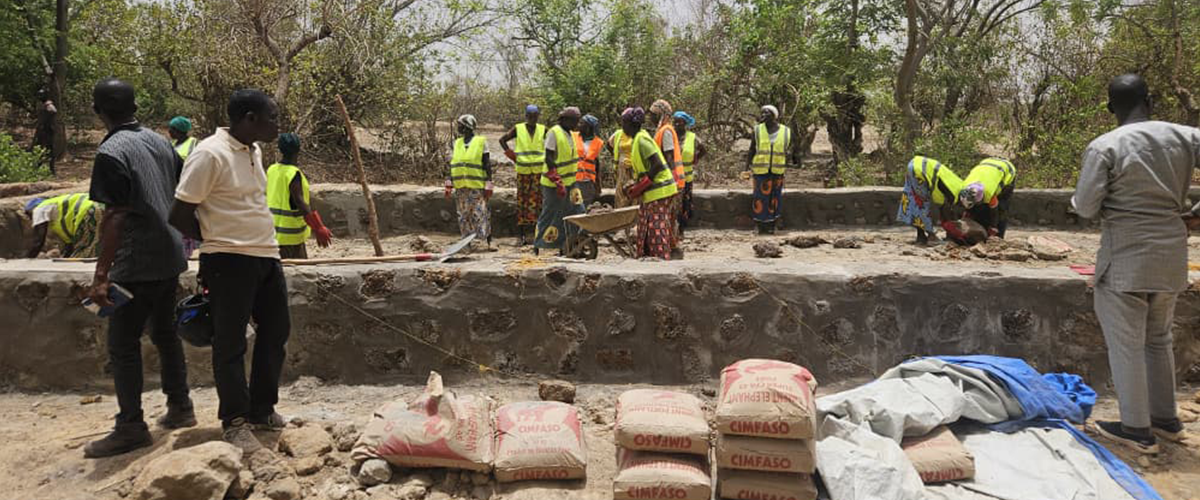
The second African recognition has been for the Conseil Régional du Centre-Ouest, in Burkina Faso, for its initiative "Réalisation de pistes rurales par la méthode Haute Intensité de Main d'œuvre (HIMO)". The project responds to a lack of connectivity in rural areas, where isolation hinders agricultural development and blocks access to markets, schools, and health centers. Instead of outsourcing heavy machinery to foreigners, the region implemented a constructive methodology based on the High Intensity of Local Labor for road reconditioning. The model directly trains and employs young people and women from disadvantaged rural communities themselves. This has a double impact: on the one hand, the region is equipped with durable and accessible road infrastructure for all types of vehicles; on the other hand, it generates immediate local employment, injecting direct income to families and stemming rural exodus.
Along with the African projects, the other three awards of this edition have been given to a region of Ukraine - which has won first place in the contest with a successful model of metropolitan governance in war conditions - and two regions of the Americas: the State of Mexico, for its territorial proximity caravans for access to justice, and the Prefecture of Pichincha, in Ecuador, for its market focused on the development of cultural industries.
As happens in each edition, the projects of these five winners will be published in detail at ORU Fogar’s Regional Good Practices Bank. This public platform serves as a global reference for consultation and learning, making it easier for successful regional solutions to be replicated by other intermediate governments anywhere in the world.