Regions have a strategic role in tourism governance
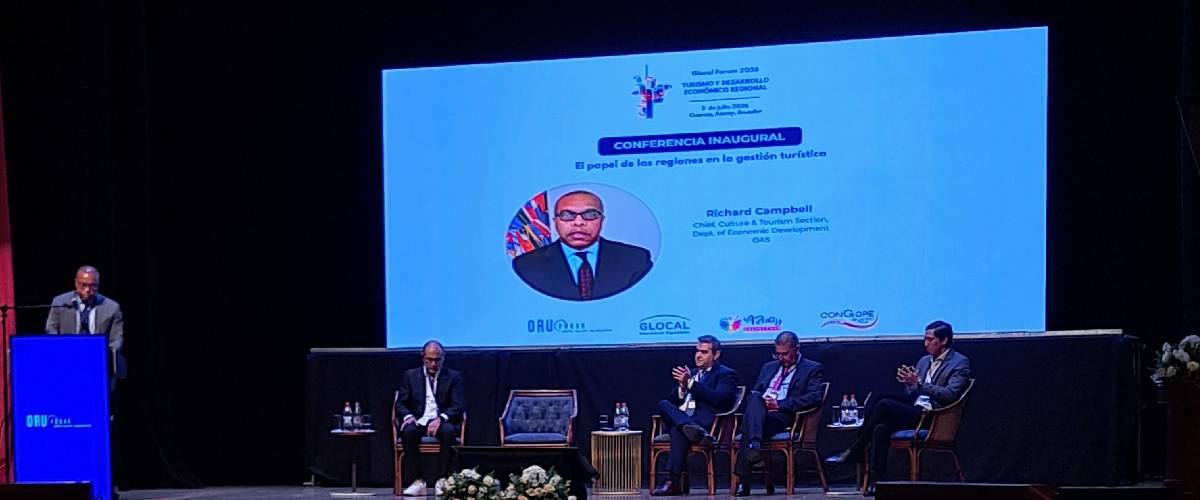
Richard Campbell
Chief of the Culture and Tourism Section, Organization of American States (OAS)
It is a true honor to address the members of ORU Fogar on behalf of the OAS, following my participation in the GLOCAL Forum on Tourism and Regional Development, as part of a dialogue that I consider essential.
During the Forum, we discussed the technical and strategic role of regions in tourism governance and development. Today, however, I would like to raise a broader question: why is the active participation of regions in tourism not merely a good idea, but a strategic imperative for our shared prosperity?
As I explained in greater detail during my intervention at the Forum, tourism policies are too often designed in national capitals, far removed from the day-to-day realities of the territories they are meant to serve. Yet we know that the tourism experience is rarely "national." Above all, it is local or regional. It takes place in our provinces, our coastal areas, our rural communities, and our cities.
When regions—such as those represented by ORU Fogar—help shape the agenda, tourism ceases to be treated as a commodity and instead becomes a reflection of who we are and of our communities, requiring responsible governance and appropriate protection.
Through my work at the OAS, we consistently see that tourism reaches its greatest potential when it serves as a driver of local development. By embracing tourism as a resource for development, regional governments contribute to the achievement of key strategic objectives.
First, when regional governments and local stakeholders design their own tourism strategies, they ensure that the economic benefits remain within the territory. They connect tourism with local agriculture, handicrafts, and the region's creative industries. In doing so, the wealth generated by visitors stays within local communities, helping to build schools, infrastructure, and resilience.
Second, we are the stewards and custodians of our regions' history, music, gastronomy, and cultural identity. A regional approach ensures that these assets are not merely "consumed" by visitors, but protected and celebrated. In this way, our cultural heritage becomes a sustainable driver of prosperity while respecting the dignity of local communities.
Third, while national policies provide the overall framework, it is regional governments that bring the pulse of the territory. By placing tourism at the center of our regional development strategies, we build a model of governance that is agile, responsive, and deeply connected to the people who live in these destinations.
Ladies and gentlemen, friends of tourism, I invite you to carry this conviction with you: we are not simply managing destinations; we are building the future of our communities and our regions.
Tourism is not merely an economic sector. It is a powerful strategic tool for empowerment. It is the means by which we, as regions, define our own narrative within the global economy.